



An API is a set of endpoints a developer writes code against. An MCP connector lets an AI assistant like Claude or ChatGPT reach into an app in plain language, with no code. With the Superfiliate MCP, you add one URL to your AI app, sign in and choose your stores.

An integration keeps two tools in sync in the background once you switch it on, like Superfiliate and Klaviyo. An MCP lets you ask your AI assistant questions about an app and hand off tasks in plain language, whenever you need them.

It's a connector with an agent behind it. The connector links your AI app to Superfiliate, and Superfiliate's agent works out what to look up or do, acting only with the signed-in user's permissions. It doesn't set strategy, budgets or benchmarks for you.

No. You add it inside your AI app, sign in to Superfiliate and choose which stores it can use. After that, you just ask.

Yes. Superfiliate's API is built for developers who need repeatable data syncs, like posting orders, feeding a BI dashboard or reacting to webhooks.

MCP vs API vs integration: which one you actually need (and where the agent fits)

Who builds each, when to use each one, and how the Superfiliate MCP and its agent fit.

by
Beth Owens
xmin read
Table of contents
What's new
How MoonBrew built a $900K+ creator channel from zero in under a year
How Timeline built a program that compounds with 2,000+ creators
August 4, 2026
How Kineon built a creator-led growth engine around a high AOV product
How JLab drove a 30% revenue lift by scaling creator campaigns with SuperBrief
How Lineage scales affiliate relationships without losing the human touch
How Omnilux drives 93% new customer revenue with Superfiliate’s gifting automations
August 18, 2025
How Epic Gardening built lasting creator partnerships with Superfiliate to drive 40% higher AOV
August 11, 2025
How Cymbiotika uses Superfiliate to enroll & engage 1,200+ affiliates
July 31, 2025
How Graza drove 7x ROAS using Superfiliate's cobranded landing pages
July 31, 2025

When MCPs, APIs and integrations, the difference comes down to who does the work. A developer builds against an API, an integration syncs data in the background, while an MCP lets you ask questions in plain language.

​

Exact numbers belong to the API. If a figure has to match every single time, use the API or an export, not a chat.

​

The Superfiliate MCP is a connector with an agent behind it. It can do what your own login can do, so check bulk tasks before you confirm.

If you've sat through any software demo recently, you've probably heard "MCP," "API" and "agent" used in the same breath by an excited sales rep.

If you left that demo out totally sure which of these needs a developer, don't worry: you're in good company.

Here's the short version of MCP vs API, and where the Superfiliate MCP fits in: An API is a door into software that developers write code against. An integration is a sync between different softwares that you switch on and then runs in background until you turn it off. An MCP lets the AI assistant you already use, like Claude or ChatGPT, reach into an app using plain language prompts.

Put simply, the question isn't which technology is more useful. It's about who is doing the legwork.

​

The one-table comparison: who builds it, who uses it, what it costs you

Let's take a look at all three side of these side by side:

Superfiliate's APINative integrationsSuperfiliate MCP
Who sets it upA developer, with an API keyYou, once, in Superfiliate's settingsYou, inside your AI app
Who uses itOther softwareNobody, it runs in the backgroundYou, in plain language
What it doesMoves specific data, like orders, conversions and discount codes, between systemsKeeps Superfiliate in sync with tools like Shopify, Klaviyo and Triple WhaleAnswers questions and takes supported actions in your account
What it costs youDeveloper time, every time something changesA few clicks, then nothingA URL, a sign-in and a few clicks

Integrations are the easy one. Once they're turned on, they disappear into the background and the data just shows up where it's needed. If you've ever segmented a Klaviyo audience using your creator data, you've used an integration without thinking without thinking twice. Ditto for Hubspot and Mailchimp, or Shopify and TripleWhale.

APIs and MCPs is where the confusion typically lives. Both are giving a tool or platform outside Superfiliate a way to access the creator data. The difference is who is doing the asking.

​

When an API makes sense and when a connector does

An MCP doesn't replace an API. They're built for different jobs.

An API is for work that has to happen the same way every time. Posting orders from another system, feeding a particular dashboard with fresh data, or kicking off a workflow when a webhook fires. A developer builds it once, and it returns the same fields in the same format on every run.

An MCP is for everything you'd otherwise click through manually yourself. All of those one-off questions you're trying to answer during the workday ("Who were my top creators this month?") and the bulk task you really don't want to do by hand ("Tag these 120 creators as Summer 2026.").

So if a number has to match to the dollar every single time, like a finance reconciliation, that's a job for the API or an export. The last thing you want is to walk into a finance review with a figure nobody can reproduce. Superfiliate's numbers come from Superfiliate's attribution, so they won't always match Google Analytics or your other dashboards.​

Why "agent" is the wrong word for a connector

Your AI assistant, whether that's Claude, ChatGPT or something else, is where you do the asking. The assistant decides when to call Superfiliate and what to ask for. The MCP is the connector: the plug between your assistant and your Superfiliate account. A connector doesn't "think" or carry out autonomous tasks on its own.

Behind the Superfiliate MCP, though, sits Superfiliate's agent. That's the part that works out what to look up or actin inside your account, using the same permissions as your own login. In other words, it's a connector with an agent behind it.

What that agent won't do is make your calls for you. It won't set your strategy, split your budget, or hand you live industry benchmarks. That is the job for the influencer marketer alone.

How the Superfiliate MCP fits

Superfiliate's API covers a fixed list of endpoints, built for developers. The MCP reaches much further. Every tool and feature in the Superfiliate app is also available through the connector, because it runs on the same internal system as the app itself, not the public API.

That reach cuts both ways, though. Your assistant can do anything your own login can do, bulk actions included. So before you confirm a bulk task, take stock to check which creators and which action it's about to run. A bulk mistake in your creator program is one your creators tend to notice before you do.

Setting it up doesn't need a developer, either. The Superfiliate MCP works with Claude, ChatGPT, Gemini, Codex, Claude Code and Cursor, and it's included on every Superfiliate plan at no extra cost. Our step-by-step setup guide covers Claude and ChatGPT.

So the next time someone in a demo throws all three words at you, here's your rule of thumb:

If a developer needs exact, repeatable data, that's the API. If two tools just need to stay in sync, that's an integration. And if you want to ask your program a question or hand off the busywork, that's the MCP. See what the Superfiliate MCP can do and how to connect it.

FAQs
Download and share
Download

Make creator partnerships your ultimate growth lever.

Book demo
Button Text

Related

How MoonBrew built a $900K+ creator channel from zero in under a year
How Timeline built a program that compounds with 2,000+ creators
August 4, 2026
How Kineon built a creator-led growth engine around a high AOV product
How JLab drove a 30% revenue lift by scaling creator campaigns with SuperBrief
Influencer marketing automation
Influencer marketing automation: What to automate first
by
Beth Owens
October 14, 2026
MCP vs API vs integration
MCP vs API vs integration: which one you actually need (and where the agent fits)
by
Beth Owens
October 14, 2026
Shopify MCP + Superfiliate MCP: Run your store and your creator program from one chat
by
Beth Owens
October 14, 2026
What is MCP? A plain-English guide for creator and influencer marketers
by
Beth Owens
October 14, 2026
Using an MCP as an agency: Ten client stores, one conversation
by
Beth Owens
October 15, 2026
What it Takes to Run Flat-Fee Partnerships
September 30, 2026
Join OuterSignal and Superfiliate for our
next Webinar
August 11, 2026
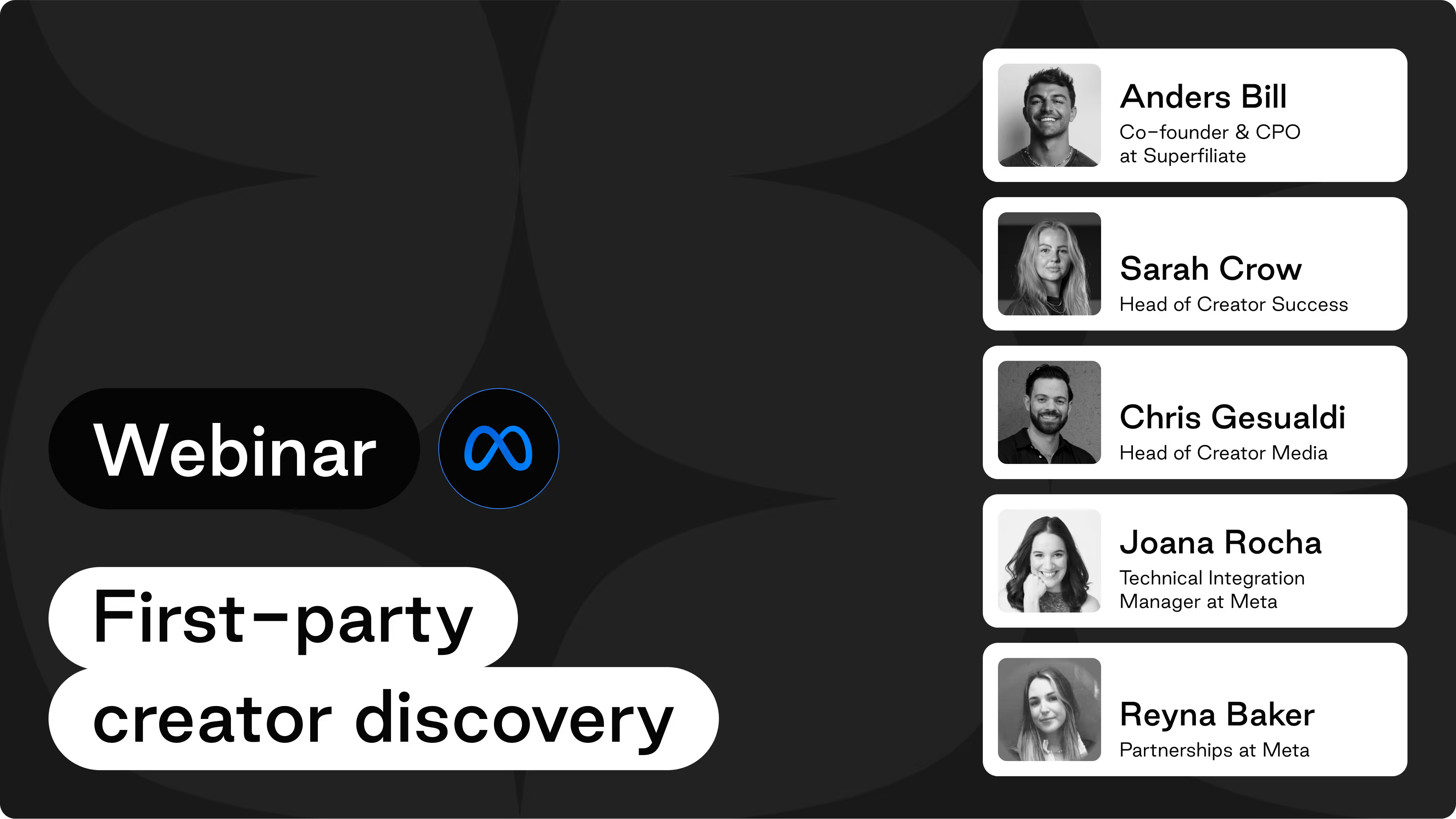
First-Party Creator Discovery with Meta
October 15, 2025
Breaking into an influencer marketing career
June 12, 2024
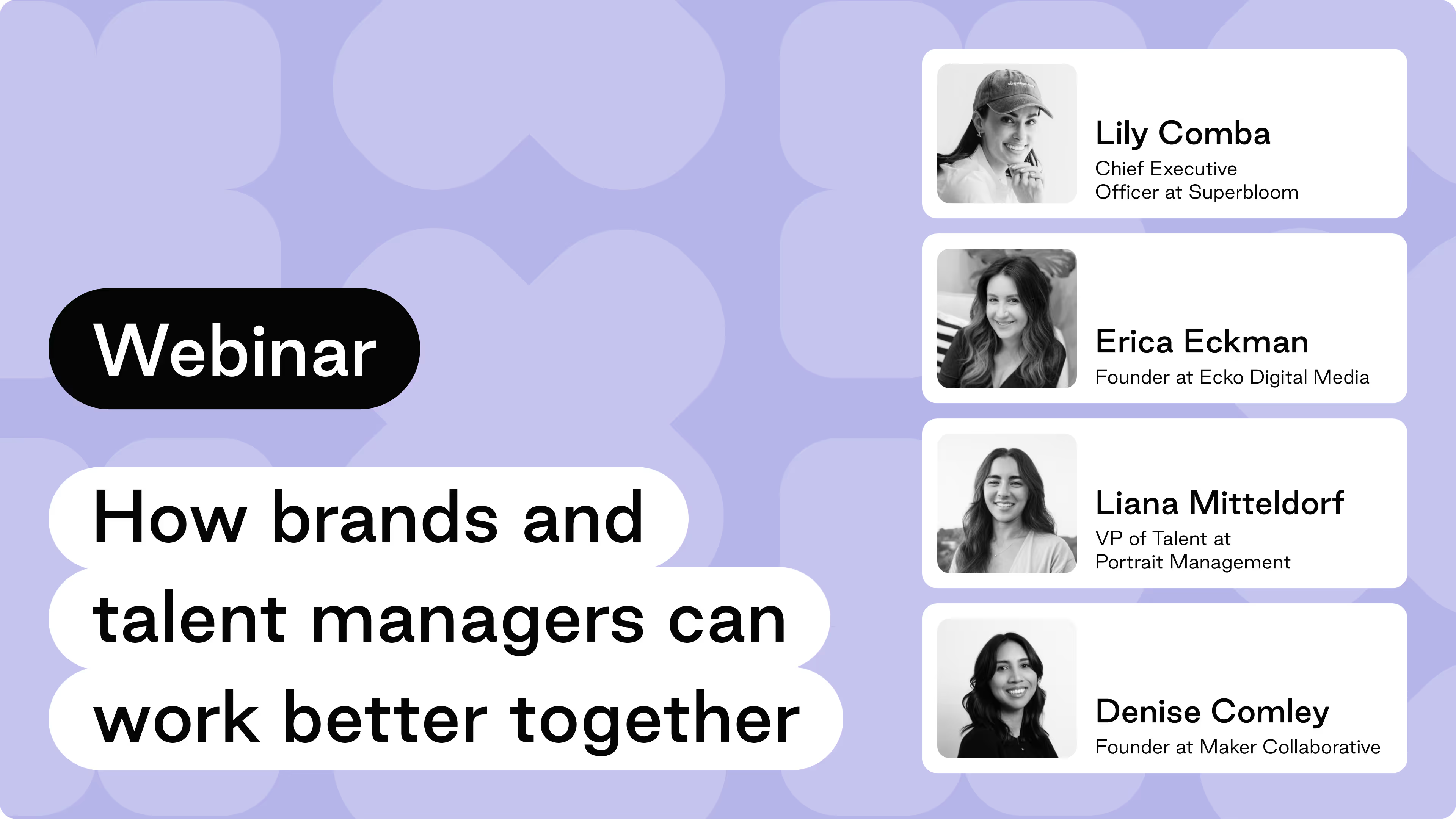
How brands and talent managers can work better together
October 17, 2024
How brands and talent managers can work better together
October 17, 2024
The future of influencer marketing in 2024
January 15, 2024
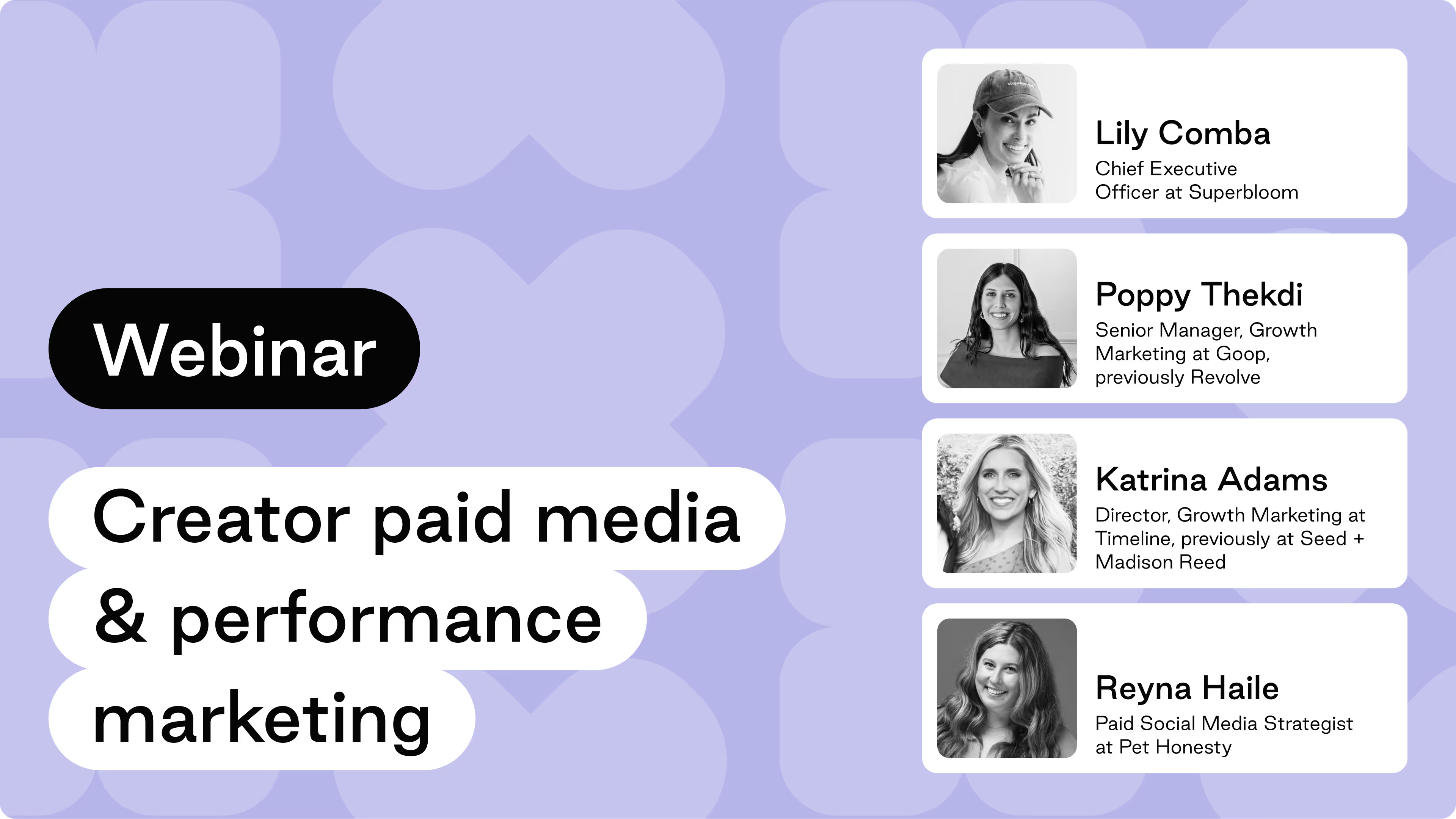
Creator paid media & performance marketing
April 4, 2024
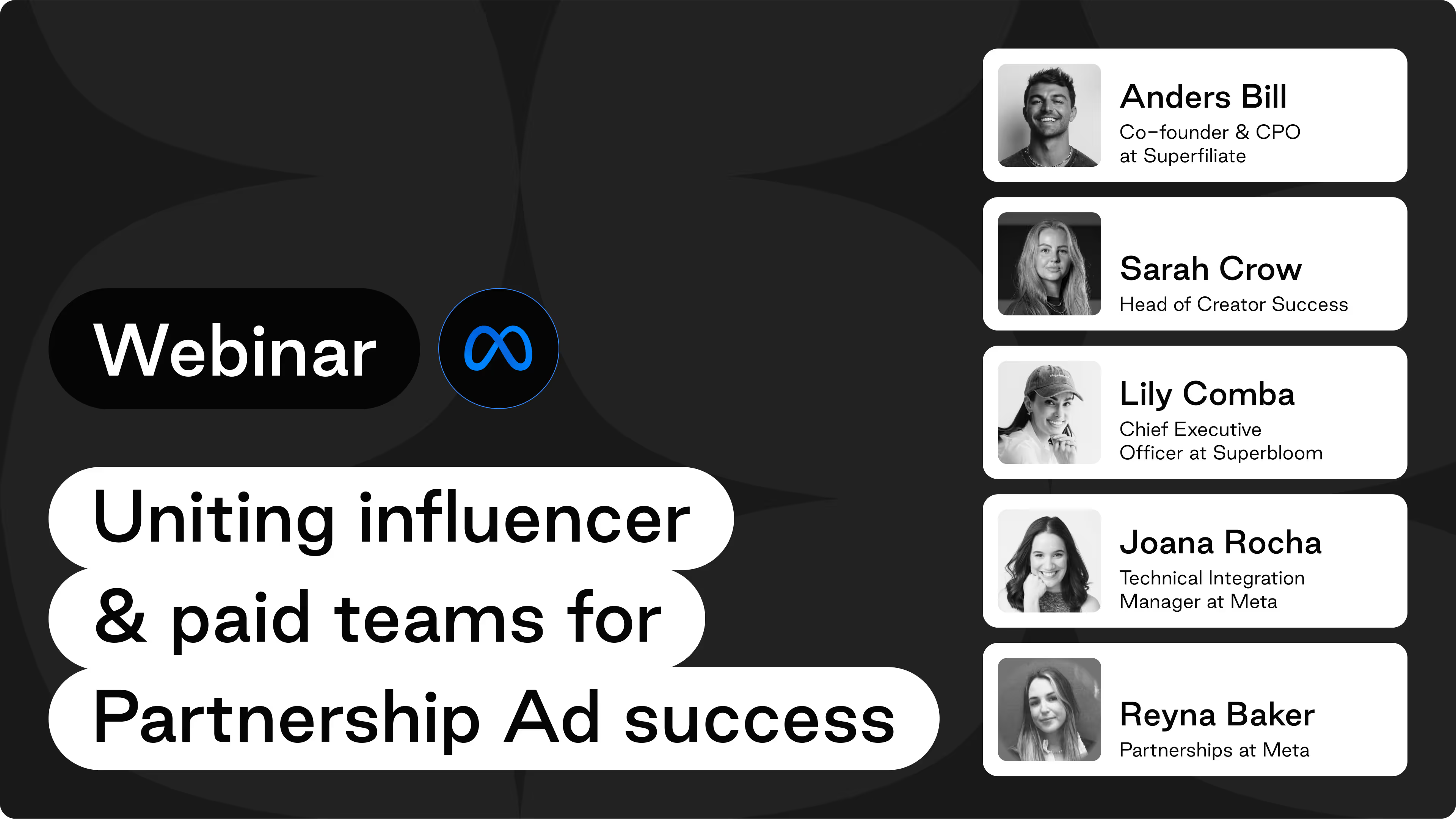
Uniting influencer & paid teams for Partnership Ad success
July 1, 2025
How MoonBrew built a $900K+ creator channel from zero in under a year
How Timeline built a program that compounds with 2,000+ creators
August 4, 2026
How Kineon built a creator-led growth engine around a high AOV product
How JLab drove a 30% revenue lift by scaling creator campaigns with SuperBrief
How Lineage scales affiliate relationships without losing the human touch
How Omnilux drives 93% new customer revenue with Superfiliate’s gifting automations
August 18, 2025
How Epic Gardening built lasting creator partnerships with Superfiliate to drive 40% higher AOV
August 11, 2025
How Cymbiotika uses Superfiliate to enroll & engage 1,200+ affiliates
July 31, 2025
How Graza drove 7x ROAS using Superfiliate's cobranded landing pages
July 31, 2025
Influencer marketing automation
Influencer marketing automation: What to automate first
by
Beth Owens
October 14, 2026
MCP vs API vs integration
MCP vs API vs integration: which one you actually need (and where the agent fits)
by
Beth Owens
October 14, 2026
Shopify MCP + Superfiliate MCP: Run your store and your creator program from one chat
by
Beth Owens
October 14, 2026
What is MCP? A plain-English guide for creator and influencer marketers
by
Beth Owens
October 14, 2026
Using an MCP as an agency: Ten client stores, one conversation
by
Beth Owens
October 15, 2026
Affiliate payouts: How to Pay Creators on Time, Every Time
by
Beth Owens
September 9, 2026
How to launch Partnership Ads in bulk to amplify winning creator content at scale
by
Beth Owens
June 12, 2026
Boosted Posts, Partnership Ads, Whitelisting: How to Amplify Creator Content That's Already Working
by
Beth Owens
June 8, 2026
The creator your program is really missing right now.
by
Beth Owens
March 11, 2026
You don't need a big budget to start a creator program. You need a starting point.
by
Beth Owens
March 4, 2026
The attribution gaps hiding in your creator program (and how to close them)
by
Beth Owens
March 16, 2026
How to set up affiliate commission so creators actually want to promote you
by
Beth Owens
May 14, 2026
How to get your creators to actually post (and keep posting)
by
Beth Owens
March 24, 2026
How to build a creator program that gets smarter over time
by
Beth Owens
April 7, 2026
You paid for the post. Did you pay for the asset?
by
Beth Owens
April 2, 2026
The creator leaderboard isn't mean. It's motivating.
by
Beth Owens
April 21, 2026
The brief that gets the best content? It's the one you didn't write.
by
Beth Owens
April 15, 2026
What does an influencer marketing manager do? 8 core responsibilities & 40+ hour breakdown
by
Beth Owens
September 16, 2025
[Webinar Recap] How Meta Partnership Ads are replacing influencer Whitelisting
by
Beth Owens
September 9, 2025
The Partnership Ads Unlock: Scaling the Future of Creator-Led Advertising
November 6, 2025
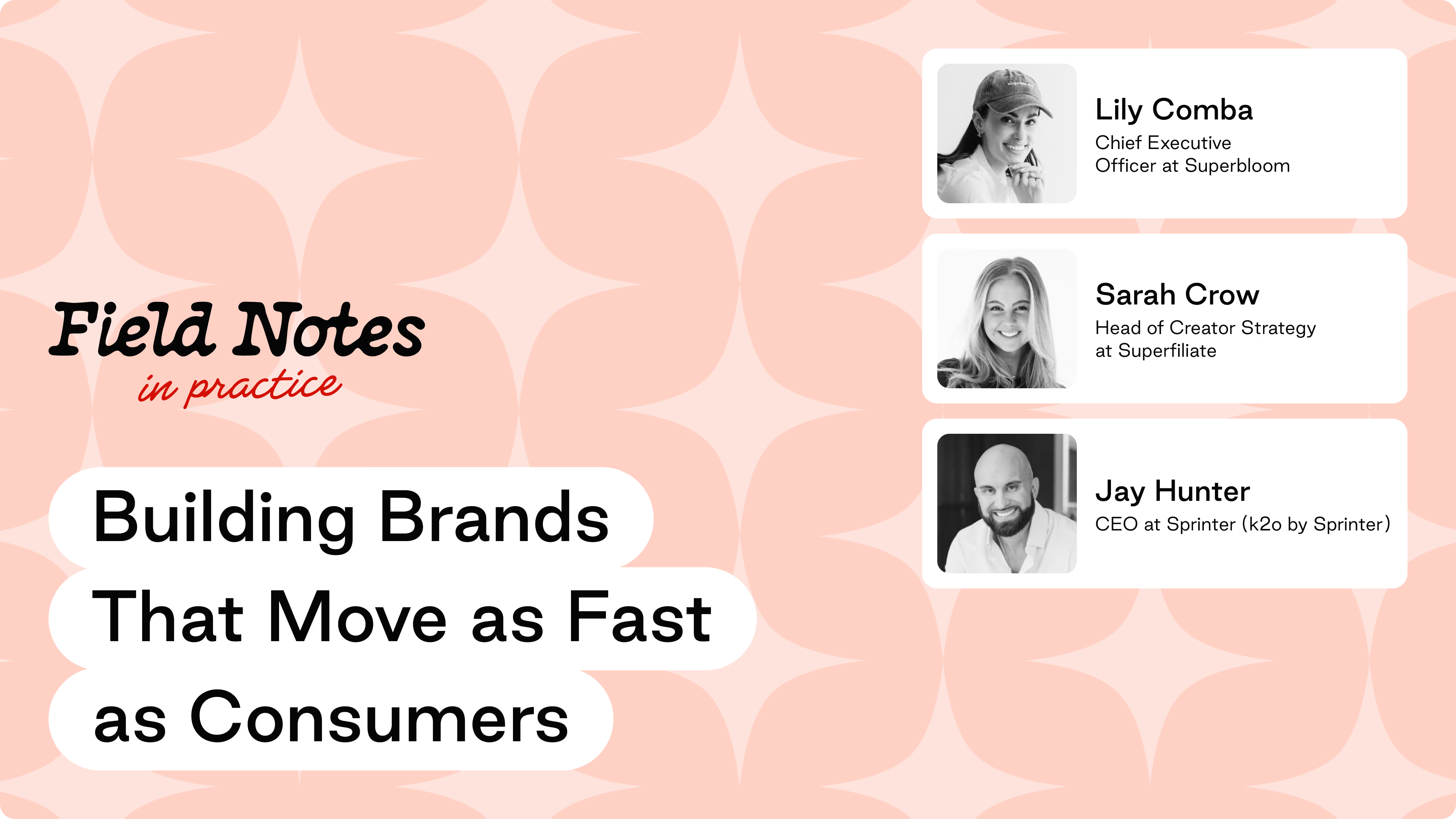
Building Brands That Move as Fast as Consumers
June 17, 2026
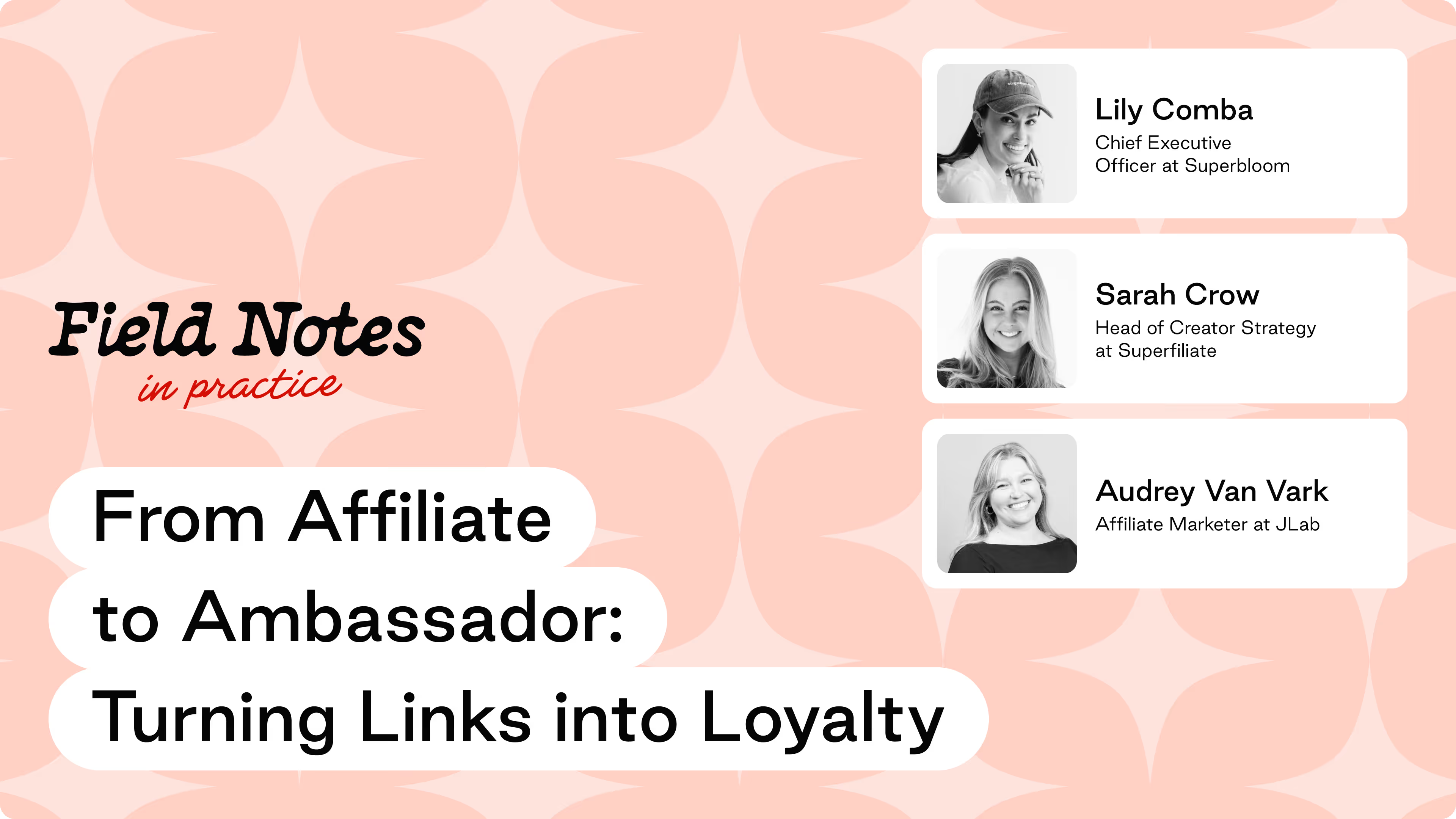
Field Notes In Practice | From Affiliate to Ambassador: Turning Links into Loyalty
March 25, 2026
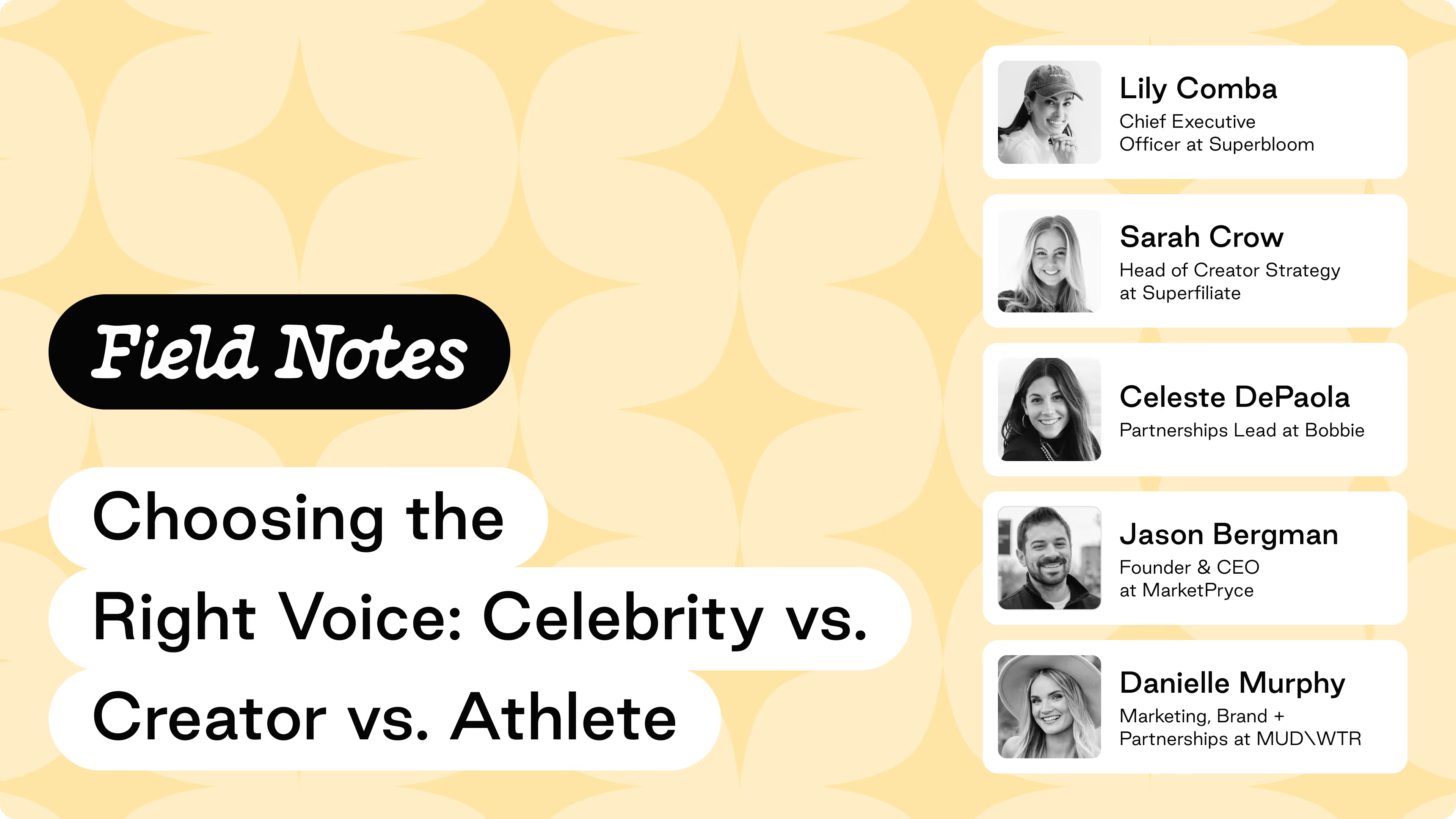
Field Notes | Choosing the Right Voice: Celebrity vs. Creator vs. Athlete
February 2, 2026
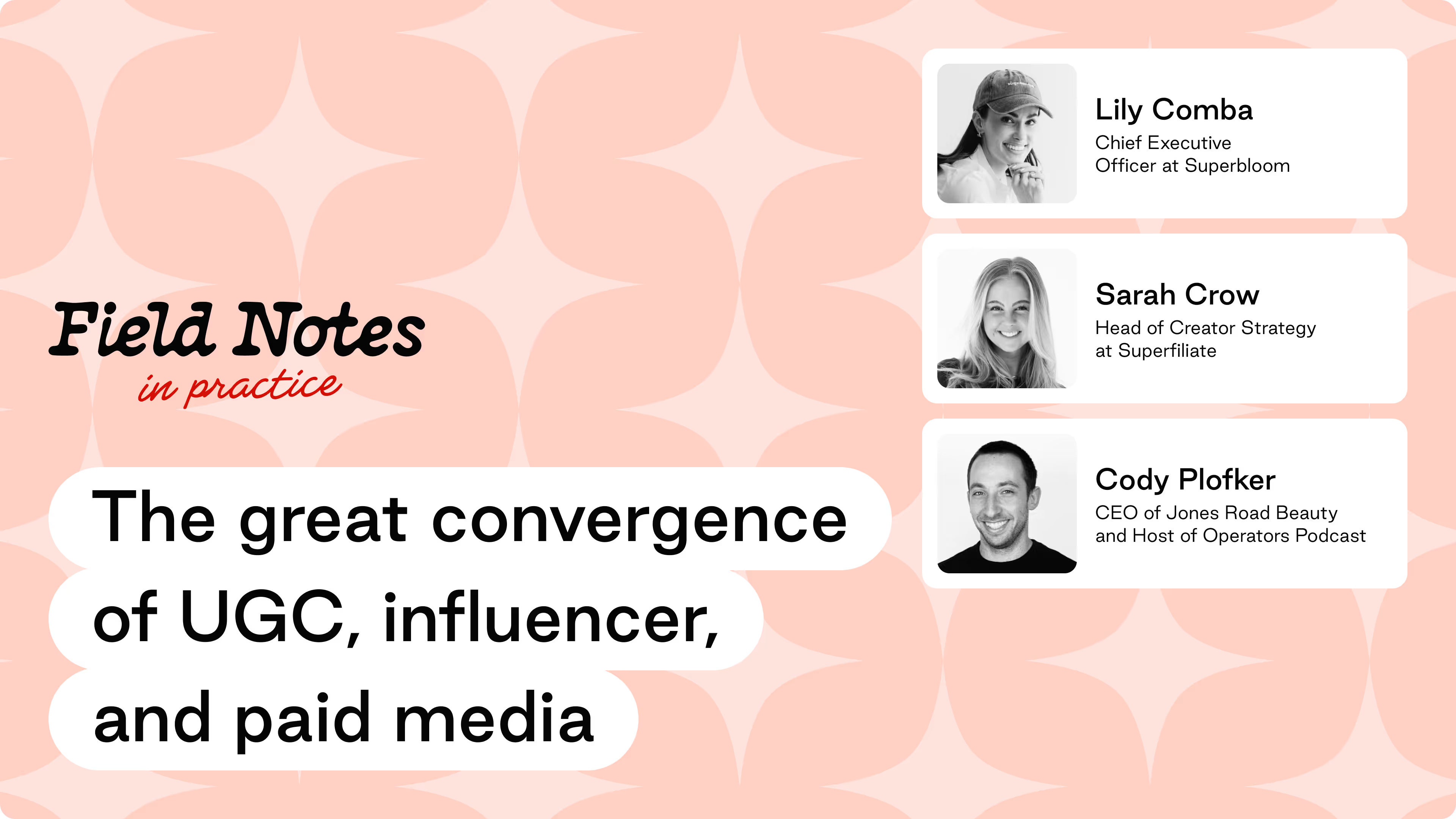
Where UGC, Influencer, and Paid Media Collide with Cody Plofker, CEO of Jones Road Beauty
January 22, 2026
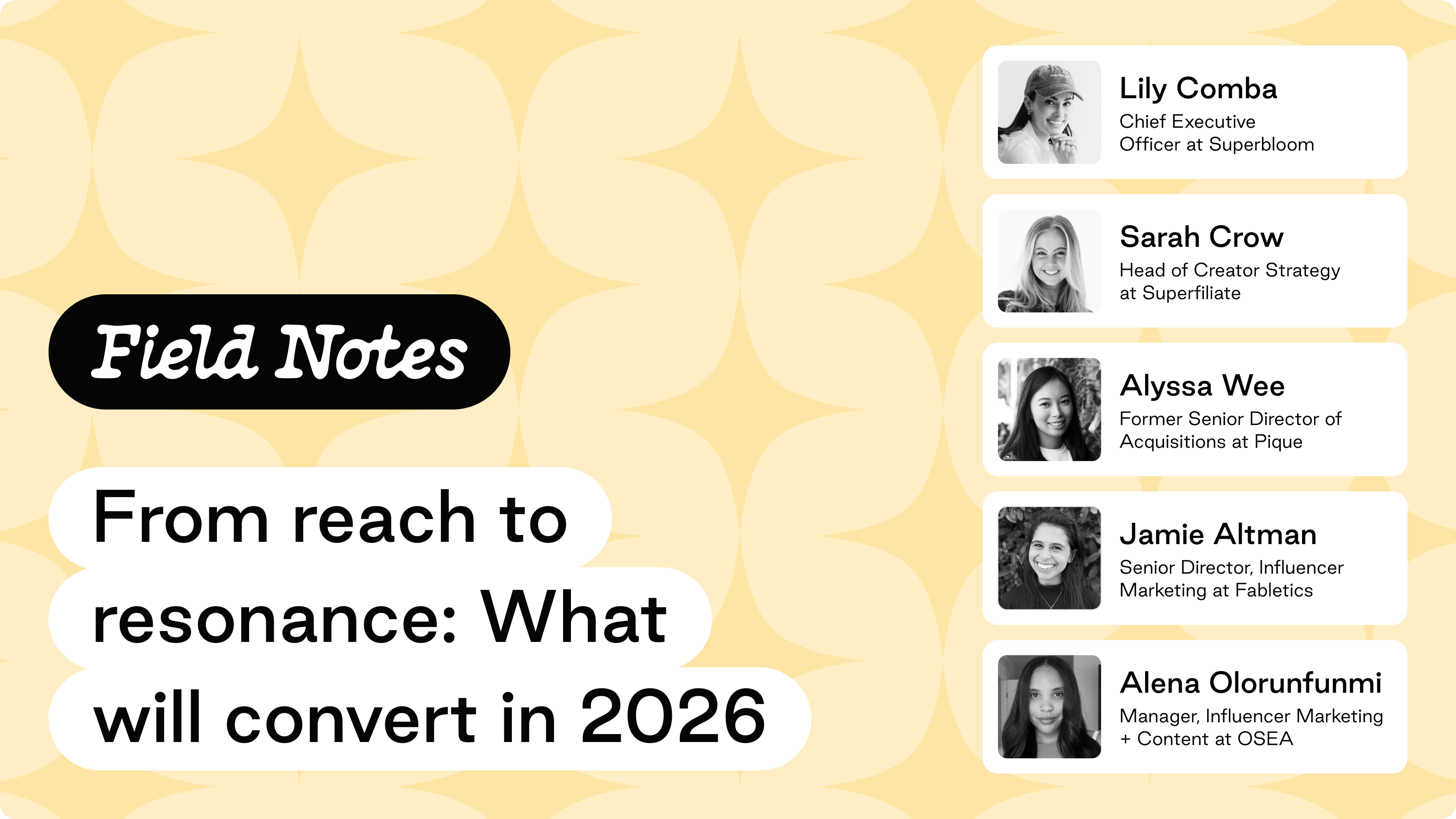
Field Notes | From Reach to Resonance: What Will Convert in 2026
November 22, 2025
Discover more about Case Studies
Keep scrolling for the latest insights
on creator marketing world. Honest talk. No secrets.
Real solutions.
“Great influencer programs don’t happen by accident, they’re built 
by marketers who understand strategy, relationships, and growth”
Sarah Crow
Head of Creator Success
“Winning at influencer marketing isn’t just about your tech stack or your budget; it’s about your ability to build relationships with creators who push your program onward.”
Beth Owens
Head of Content

Lorem ipsum dolor sit amet, consectetur adipiscing elit, sed do eiusmod tempor incididunt ut labore et dolore magna aliqua. Ut enim ad minim veniam, quis nostrud exercitation ullamco laboris nisi ut aliquip ex ea commodo consequat. Duis aute irure dolor in reprehenderit in voluptate velit esse cillum dolore eu fugiat nulla pariatur.