

Field Notes | Choosing the Right Voice: Celebrity vs. Creator vs. Athlete

Start with brand affinity, not size. Bobbie asks whether a partner is in the right season of life. MUD/WTR asks about engagement quality and community trust. MarketPryce asks whether the product makes sense for a college athlete's lifestyle. It’s about fit, not follower count.
Celebrity creates reach. Creators create trust. The magic happens when you layer them. Bobbie's most successful campaigns pair a celebrity moment with a "supporting cast" of mid-tier and nano creators who convert mass awareness into genuine community engagement.
Don’t chase the big fish until you've built the foundation. Start with the customers who already use your product. The celebrity moment is a destination–not a starting point.
For most brands, choosing between a celebrity, a creator, and an athlete feels like a channel decision. In reality? It's a question of fit:
- The fit between the product and the partner's story
- The fit between the partner's audience and your customer
- The fit between the “moment” in the market and the kind of reach you actually need.
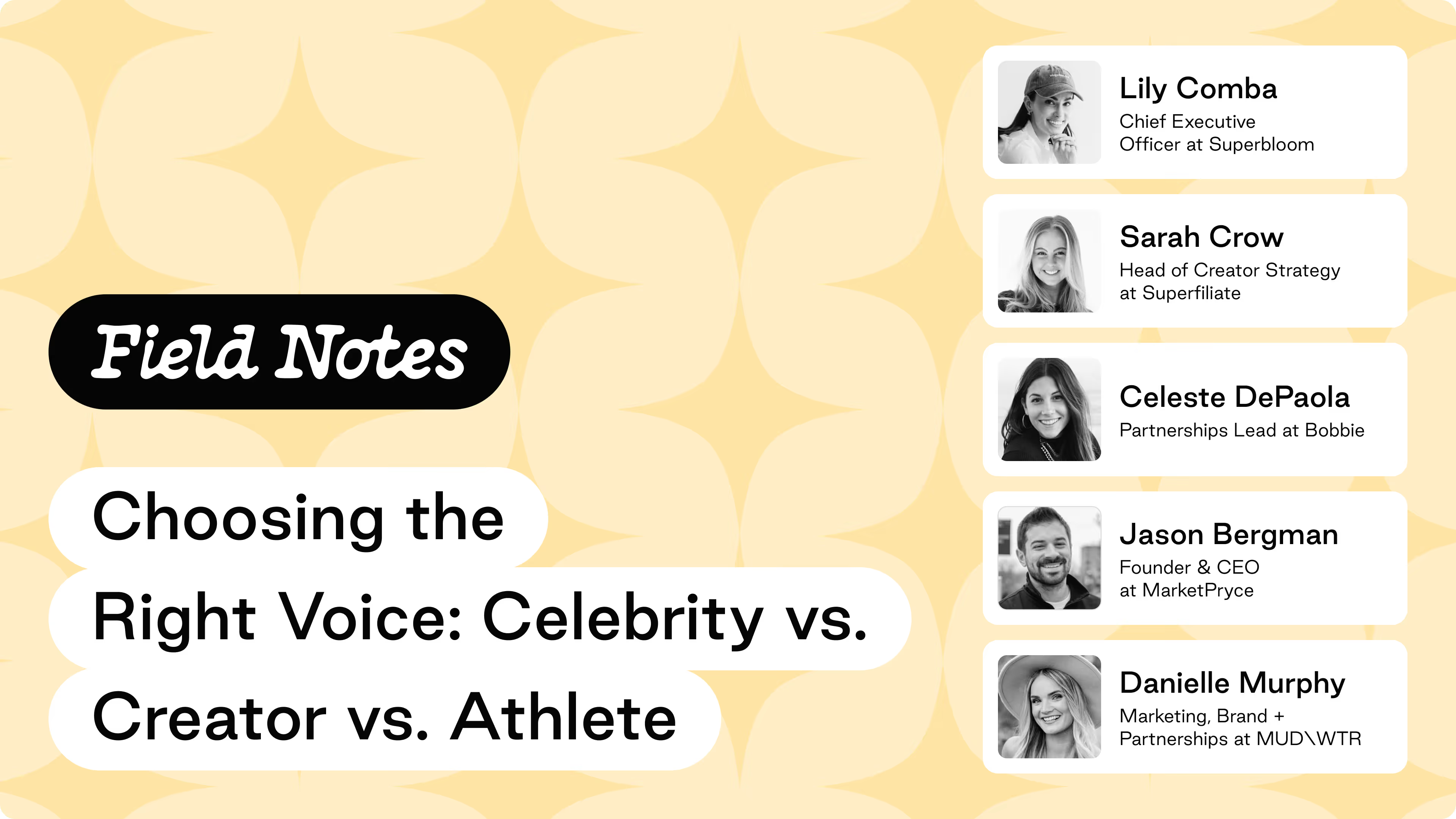
At the latest Field Notes session, we brought together three practitioners who work across every tier: Celeste De Paola from Bobbie (celebrity and macro), Jason Bergman from MarketPryce (NIL and college athletes), and Danielle from MUD/WTR (macro creator and performance partnerships).
Here's what choosing the right voice actually looks like in practice:
Your first question should be about fit, not follower count
Creators, athletes, and celebrities are fundamentally different types of partners. But the question to find the right one is remarkably similar: What is the product relationship to this person's actual life?
At Bobbie, Celeste's first filter is whether they are in the right season of life for their product. Is this person pregnant? Have they just become a parent? For an infant formula brand, the partner's personal story literally IS the product story.
That makes Bobbie's program inherently reactive. When a well-known figure announces a pregnancy, the team begins strategizing how to engage.
"It's very much about time and place. We stay nimble to seize on an opportunity to bring in a voice that genuinely speaks to our customers."

Celeste DePaola
Partnerships Lead at Bobbie
At MUD/WTR, the approach is equally selective. "The first thing we look for actually isn't reach," Danielle said. "It's about resonance. What engagement quality has this person cultivated in their community? What kind of trust have they established?"
We actually did an entire webinar on this topic to kick off 2026–check it out here!
Celebrity is for change, not just awareness
Bobbie has worked with Naomi Osaka and Cardi B, but those partnerships didn't start with a brand brief. They started with the partner choosing the product and having a story they couldn’t script for them.
The scope of Bobbie's celebrity campaigns goes beyond product awareness. With Naomi Osaka and Cardi B, the campaign centered on paid maternity leave. "It's very rarely about pushing products," Celeste said. "It's more about pushing change, pushing policy." The celebrity provides mass cultural reach, meaning the brand message can be anchored to something bigger than a single purchase decision.
Of course, there's a trade-off that comes with this. When you partner with someone who is unapologetically themselves, you sign up for everything that comes with them.
Our recommendation? Evaluate value alignment rigorously. Then own the decision.
Why celebrity alone isn't a strategy: the supporting cast
Jason sees a clear dynamic with athlete programs. Smaller creators get more excited when they're part of a campaign that a well-known athlete also touched. That reflected credibility makes them more engaged partners, and signals to other brands that yours is worth associating with.
Likewise, when Bobbie launches a major celebrity campaign, they don't let that voice carry the entire load. They build a second tier of mid-tier and nano creators who engage directly with the customer base, which helps to convert mass awareness into meaningful community trust.
Celeste explains the concept of the “supporting cast” for your celebrity partnerships:
The NIL guardrails brands worry about (that don't really exist)
Brands approach NIL convinced that there are regulatory landmines everywhere. In practice, the rules are narrower than they seem.
Athletes can't use their school's official marks (logos, specific uniforms) in brand content, and they need to be careful about filming on campus, but that's essentially it. In fact, the athletes themselves are often the most rigorous about product fit; Jason shared stories of athletes turning down deals because of a single, unrecognizable ingredient.
There’s one budget structure that Jason has found most effective for brands new to NIL: so-called “starter deals” combining a small flat fee ($50–100) with a CPM component (roughly $10 per 1,000 views, capped). That structure lets a brand work with 100 athletes, identify the 20–30 who perform, and double down on those with further partnerships, allowing you to rest and refine the formula that works.
Using the “whole buffalo” to maximize value
Danielle's most actionable framework comes with an analogy: Don't just post organically.
"How can you get ads usage? Maybe you get the raw footage so your editor can use B-roll. Maybe you do a mashup ad, or a static with a quote from them. Think about it holistically; how can you use it all?"

Danielle Murphy
Marketing, Brand + Partnerships at MUD\WTR
This is the "whole buffalo" approach: structuring every creator partnership from the start to extract maximum output across organic content, paid media, raw footage, and static assets. You don't discard a partnership when one format underperforms — you find the format where it does.
Danielle structures deals with this in mind before they're signed. She uses a lower flat rate plus performance-based ad spend, with access to raw footage built in. The creative brief follows the same logic: share what made your best-performing partnerships work, give partners creative freedom within it, and hold them accountable to shared goals.
So, who is the right voice?
The right voice isn't the biggest one. It's the one that fits your product, your customer, and your moment. That calculus looks different for a formula brand reacting to a celebrity pregnancy than it does for a subscription coffee brand aiming to build long-term ritual habits.
But the starting question is always the same: Does this person actually have a genuine relationship with your product—and genuine credibility with the audience you're trying to reach?
Ready to build a partnership program where every voice, from nano creators to celebrities, is working toward the same goals? See how Superfiliate helps brands activate across every creator tier, from community partnerships through upfront campaigns.